
Last updated
Living the Florida lifestyle means enjoying endless summer days, deep-sea fishing off the coast, and transitioning seamlessly from the beach to the vibrant Miami nightlife. However, while this environment is an absolute paradise for us, it is a literal warzone for mechanical horology.
The unique combination of ocean saltwater, extreme UV rays, ninety percent humidity, and massive temperature swings can completely destroy a luxury timepiece if you do not know how to care for it. Learning how to properly protect watch seals and mechanisms is the single most important part of collecting down here.
As a premier Florida watch store, we see the devastating damage the local climate can cause firsthand. From rusted movements to completely seized dive bezels, the repair bills can easily reach into the thousands. We have gathered the top maintenance secrets from master watchmakers and hardcore diving communities to help you preserve your investment. Here is your ultimate survival guide for the tropical climate.
Table Of Contents
The Golden Rule: Securing The Screw-Down Crown
Before you even think about stepping onto a boat or jumping into the pool, you must perform the most basic but crucial check in all of watch care. You must ensure your winding crown is completely screwed down.
A staggering ninety percent of all water damage cases sent to service centers happen because the owner simply forgot to lock the crown. The crown is the primary gateway directly into the delicate mechanical movement. If it is left unscrewed or even partially open, water will immediately flood the case and instantly rust the internal components.
The Quick Crown Check
Always press the crown firmly against the case and turn it clockwise until you feel tight resistance. Do not over-tighten it with extreme force, but ensure it is completely flush. Never unscrew or adjust your watch while it is wet.
The Saltwater Protocol Beating Bezel Seize
Top-tier brands like Rolex use 904L Oystersteel because it is incredibly resistant to corrosion. However, many other luxury brands use standard 316L steel, which is much more susceptible to pitting from the harsh Atlantic saltwater.
The true danger is actually not the steel melting away. The biggest threat is the saltwater drying inside the microscopic crevices of your watch. When saltwater evaporates under a dive bezel, it leaves behind sharp, rigid salt crystals. Over time, these crystals act like cement, causing your rotating bezel to completely lock up and seize.
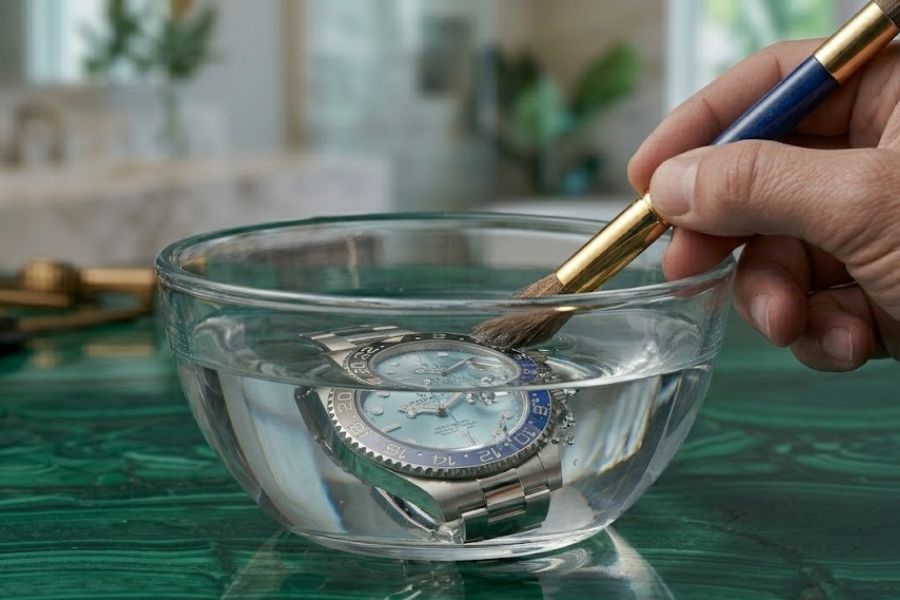
The Community Warm Water Soak Hack
Simply running your watch under the tap after a beach day is not enough. Hardcore dive watch collectors have perfected a specific cleaning method.
“Never just rinse it. I soak my Submariner in a bowl of warm fresh water for fifteen minutes after a dive. While it is fully submerged, I rotate the bezel back and forth for a full minute. It physically flushes out all the hidden salt and sand trapped underneath.”
Pro Diver Advice via Reddit r/Watches
While following the official Rolex watch care guidelines to rinse your timepiece under the tap after a beach day is a great start, hardcore dive watch collectors have perfected a more thorough cleaning method.
Surviving Thermal Shock And Florida Humidity
Florida residents constantly move from freezing sixty-eight degree indoor air conditioning straight into ninety-five degree outdoor heat. This rapid and violent temperature shift causes a physical reaction known as thermal shock.
If your watch has aging, dried-out rubber gaskets, this extreme temperature swing will create a vacuum effect, drawing microscopic ambient humidity directly into the case.
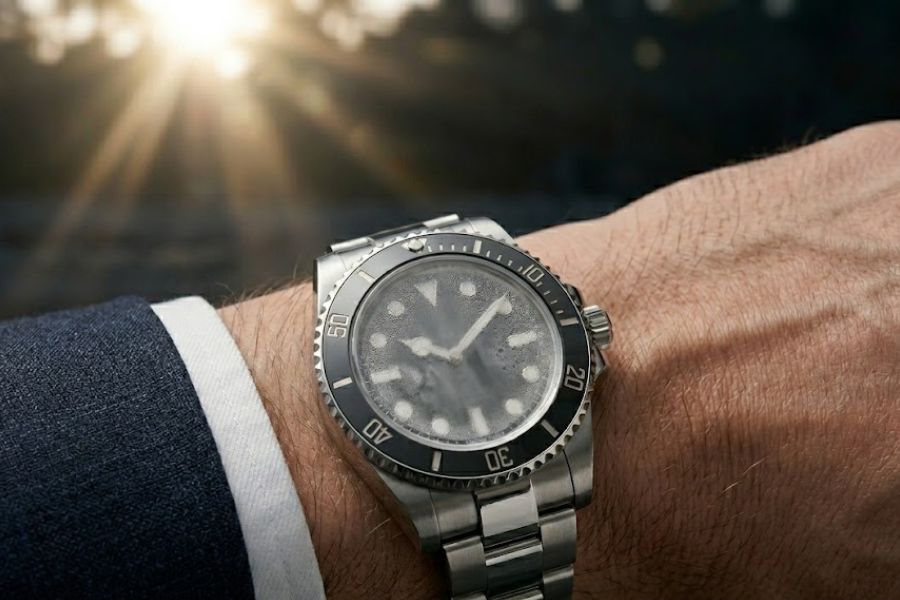
Identifying Moisture Damage On Your Rolex
If you walk outside and suddenly notice a fog of condensation forming under your sapphire crystal, you have a major emergency. This means your water resistance is entirely compromised, and the movement is actively beginning to rust. You must take it to a professional watchmaker immediately to have the case opened and dried.
To protect watch integrity, you should have your local dealer perform a dry pressure test on your timepieces at least once a year to ensure the rubber gaskets are still fully sealed.
The Ultimate Summer Strap Guide For Rolex
Wearing a luxury leather strap in the Florida summer is a rookie mistake. Sweat, humidity, and saltwater will completely destroy an expensive alligator strap in a matter of weeks, causing it to crack, fade, and hold onto terrible odors.
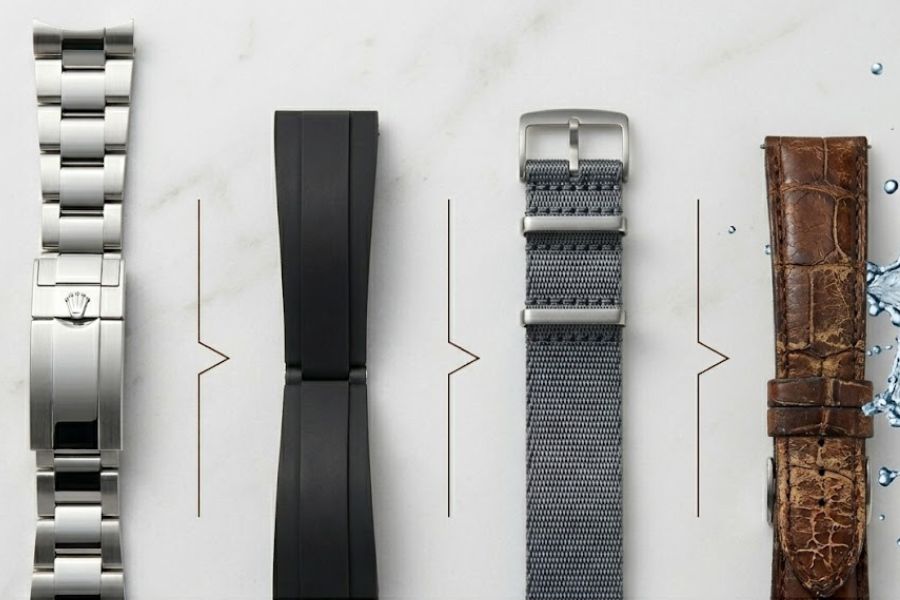
You need to adapt your watch to the tropical climate by swapping out your bands. Here is our breakdown of the best materials for the local weather.
| Strap Material | Florida Durability | Best Use Case | The Verdict |
|---|---|---|---|
| Stainless Steel Bracelet | Excellent | Daily wear and pool days | The undisputed all-round champion. Easy to wash and incredibly durable. |
| Oysterflex (Rubber) | Supreme | Boating and active sports | The ultimate tropical flex. Completely waterproof and highly breathable. |
| Nylon NATO Strap | Great | Beach days and diving | Easily washable and dries quickly. Provides extra security if a spring bar snaps. |
| Alligator Leather | Poor | Indoor formal events only | Keep this strictly in the watch box until the cooler winter months arrive. |
Your Quick Summer Rolex Watch Care Checklist
Before you head out to the coast, run through this rapid checklist to ensure your timepiece survives the weekend.
- Verify the crown is tightly screwed down to the case.
- Swap out any leather straps for steel, rubber, or nylon.
- Do not apply spray sunscreen while wearing your watch, as the chemicals degrade rubber gaskets.
- Perform the warm water soak and bezel rotation after any exposure to the ocean or chlorine.
- Have your gaskets pressure tested annually before the summer season begins.
Ready To Upgrade Your Summer Rotation
Not every watch is built to survive the harsh tropical elements. If your current daily wearer lacks the proper water resistance, or if you simply want a dedicated vacation piece that can handle the ocean and still look incredible at dinner, we have exactly what you need.
Looking to sell your used Rolex? Or to buy? Our experts at Florida Watch Exchange will help you find the perfect summer companion that fits your lifestyle perfectly.
After the Summer, Before You Sell: What Salt and Sun Do to the Offer
Update, September 2026. The care steps above keep a watch running, and they also protect what it is worth. When we price a watch that has spent a season on the water, three things get looked at first, and each one moves the number.
- Bezel and crown action. A ceramic bezel that grinds or a crown that will not seat cleanly means salt got past the gaskets. That usually costs a service before resale, and the offer reflects it.
- Case and bracelet condition. Sharp, unpolished case edges hold value. A case that has been heavily polished to hide corrosion pitting or deep scratches is worth less to the next buyer, however clean it looks in a photo.
- Service records. A pressure test or a full service from Rolex or a recognized watchmaker, with the receipt, takes the risk off the next owner and lifts the offer. Keep the paperwork with the box and card.
The full list of what raises and lowers an offer is on the Sell a Watch page. If your daily wearer has taken a beating this summer, that table tells you what to expect before you ask for a quote.
Next Steps With Florida Watch Exchange
Living on the water is hard on a watch, and it shows up in the offer. If you are thinking about moving a piece on, get a market-backed offer here, or see how we work with sellers in Miami Beach. Not sure how old the watch is? Try the Rolex serial number lookup.