
Last updated
In Miami, luxury watches are not just timepieces, they are part of the visual language of status, success, and social identity. From the rooftops of Brickell to the nightlife of South Beach, watches are worn less as instruments of time and more as symbols of presence. In this environment, the demand for aftermarket diamond customization has grown rapidly, driven by culture, visibility, and social media influence.
However, behind the shine of an iced-out Rolex, Audemars Piguet, or Patek Philippe lies a financial reality that many buyers only discover when they attempt to resell the piece. The transformation may enhance appearance, but it permanently changes the way the watch is classified, valued, and traded in the global secondary market.
The phrase aftermarket diamonds has become one of the most searched topics in the luxury watch world, particularly in Florida. The appeal is simple and understandable: more brilliance, more attention, and a stronger visual statement. But in the secondary market, customization does not increase value. It fundamentally alters the identity of the watch, separating it from factory specifications that define liquidity and global demand.
At Florida Watch Exchange, this reality is seen daily. Watches that once held strong resale value become non-standard assets that traditional dealers and collectors will not purchase at market price. This is not a subjective opinion or preference. It is a structural difference in how the luxury watch economy operates.
Why Miami Has Become the Global Hub for Aftermarket Diamond Watch Culture
Miami’s luxury ecosystem is unique because it blends international wealth, entertainment culture, influencer marketing, and fast-moving fashion cycles. Unlike traditional financial cities where luxury is often understated, Miami rewards visibility. Watches are not just worn; they are displayed in environments where perception matters as much as ownership.
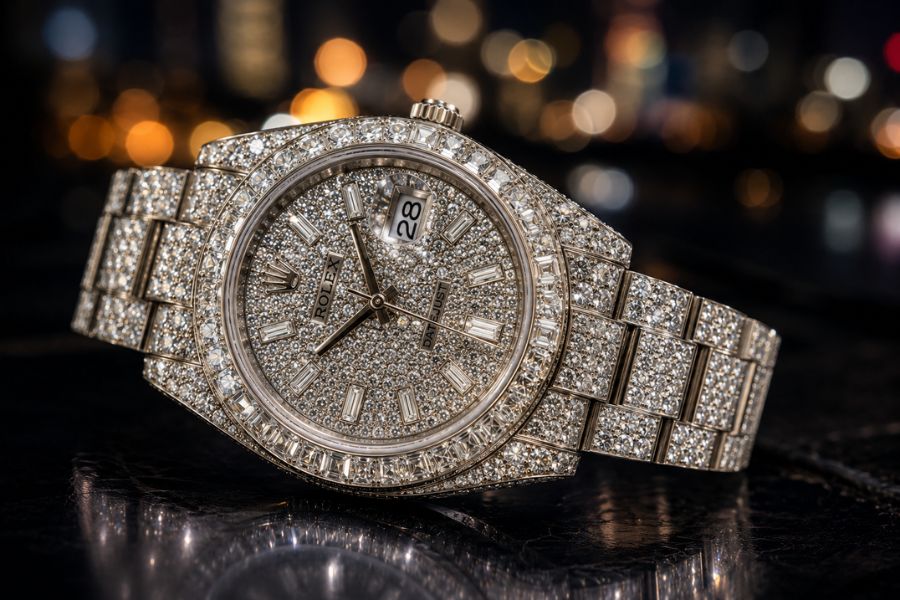
This cultural structure has made Miami one of the strongest markets for aftermarket diamond customization in the world. The demand is not driven purely by horology enthusiasts but by individuals seeking visual impact in environments where luxury is part of daily interaction.
Nightlife Influence and Social Media Pressure
In districts such as Brickell, Wynwood, and South Beach, luxury watches are part of identity signaling. A Rolex Daytona or Audemars Piguet Royal Oak does not simply represent wealth; it represents positioning within a social environment where visibility matters.
Social media has amplified this pressure significantly. On platforms where engagement is driven by attention, iced-out watches often outperform factory models visually, even if the underlying financial value is significantly lower. This creates a disconnect between perceived status and actual market value.
The Shift from Investment Asset to Visual Expression
A factory Rolex is one of the most liquid luxury assets in the world. It can be sold quickly, internationally, and at predictable market pricing. Once aftermarket diamonds are introduced, the watch exits this standardized financial ecosystem.
Instead of being evaluated as a reference-based asset, it becomes a subjective piece of jewelry. This shift is where long-term financial misunderstanding begins, especially for first-time luxury buyers entering the secondary market.
Understanding What Aftermarket Diamonds Actually Mean in Luxury Watchmaking
Aftermarket diamonds refer to any diamond setting performed outside the original manufacturer’s production process. This applies across Rolex, Audemars Piguet, Patek Philippe, Cartier, Hublot, and Richard Mille. The key distinction is not the quality of the diamonds, but the fact that the modification is not factory-authorized.
Even when executed by highly skilled jewelers, aftermarket modifications remove the watch from its original production specification. In the luxury watch market, originality is not cosmetic; it is financial structure.
Factory Diamonds vs Aftermarket Diamonds Across Luxury Brands
| Luxury Brand | Factory Configuration | Aftermarket Impact |
|---|---|---|
| Rolex | Only factory-set gem models are recognized as original | Aftermarket diamonds eliminate investment-grade classification |
| Audemars Piguet | Royal Oak gem-set models are tightly controlled and documented | Modification significantly reduces collector demand |
| Patek Philippe | Highly curated factory gem pieces maintain strong auction demand | Alteration removes auction eligibility in many cases |
| Cartier | Occasional factory jewelry watches with diamonds | Non-factory modification reduces brand collectability |
| Richard Mille | Ultra high-value factory gem-set limited editions | Aftermarket modification destroys rarity classification |
Types of Aftermarket Watch Modifications
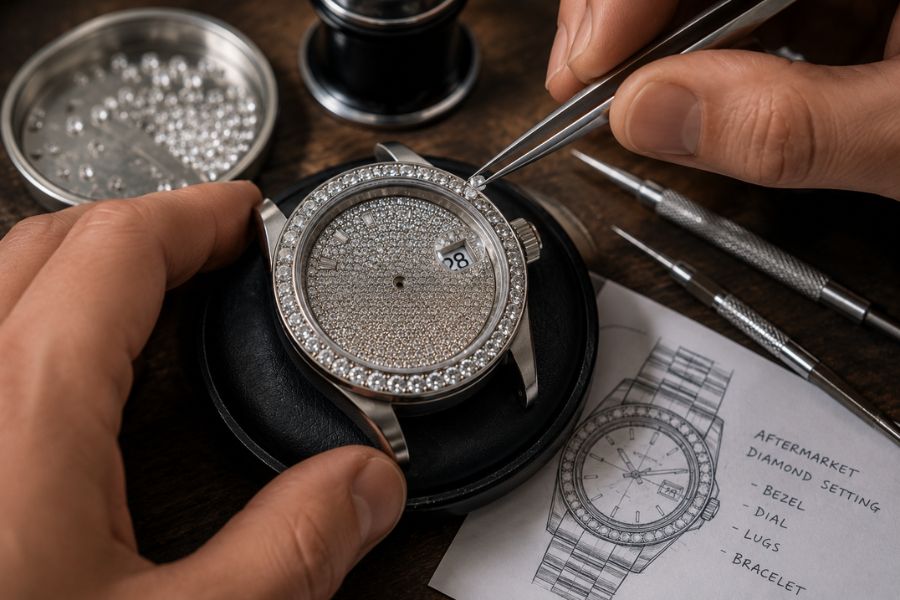
Aftermarket customization varies in complexity, but all forms affect valuation in the secondary market:
- Replacement of factory bezels with diamond-set alternatives
- Full dial paving with aftermarket stones
- Case drilling and stone setting along lugs and mid-case
- Bracelet modification with diamond links
- Conversion of steel sports models into full iced-out pieces
How Aftermarket Diamonds Impact Resale Value and Market Liquidity
The luxury watch secondary market operates on a structured system of comparables. Pricing is determined by reference model, condition, originality, and global demand. Once a watch is modified, it no longer fits within standardized valuation models used by dealers and auction houses.
If you spend time reading collector discussions, you’ll notice a recurring pattern. Communities such as r/Rolex and r/Watches frequently advise buyers to preserve factory originality whenever possible, particularly on highly collectible references.
Why Dealers Avoid Modified Watches
Most established luxury watch dealers and platforms avoid aftermarket diamond watches due to several structural risks. The first is authenticity verification. Once a watch is modified, it becomes difficult to confirm factory-original specifications. The second is insurance liability, as modified pieces are often excluded from standard coverage categories.
The third factor is resale unpredictability. Unlike factory watches, modified pieces do not have stable global pricing benchmarks, which makes them difficult to trade efficiently across markets.
This is why most pre-owned Rolexes and luxury watches in the professional market are strictly evaluated in original condition.
The Liquidity Problem Most Buyers Do Not Expect
Liquidity is the defining difference between a luxury watch and a jewelry piece. A factory Rolex or Audemars Piguet can be sold quickly in almost any major city worldwide. A modified watch, however, becomes a niche product dependent on local demand and subjective taste.
This reduction in liquidity is often the most financially significant consequence of aftermarket diamond modification, even more than the initial loss in valuation.
Real Market Impact of Aftermarket Diamond Luxury Watches
| Condition | Market Behavior | Liquidity Level |
|---|---|---|
| Factory Original Rolex or AP | Strong global resale demand with predictable pricing | High liquidity |
| Light Aftermarket Modification | Reduced dealer interest and partial valuation discount | Moderate liquidity |
| Fully Iced-Out Watch | Often priced based on metal and stone melt value | Low liquidity |
Even when aftermarket diamond work costs thousands of dollars, the secondary market does not assign proportional value. Buyers in the professional watch ecosystem prioritize originality, not customization.
The value of a diamond depends on much more than size. Cut, clarity, color, and craftsmanship all influence pricing. The Gemological Institute of America (GIA) provides educational resources explaining how diamonds are graded and evaluated.
Can You Sell a Luxury Watch With Aftermarket Diamonds?
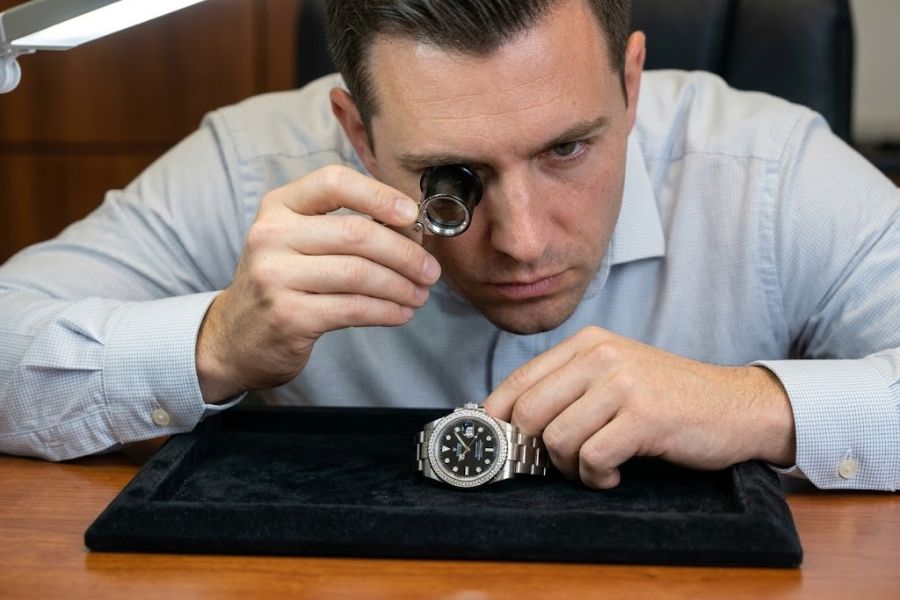
It is possible to sell a modified watch, but not through traditional luxury watch channels. Most established dealers will either decline the watch or price it significantly below market reference value.
In many cases, valuation shifts away from horological pricing entirely and moves toward jewelry or material-based assessment.
Who Actually Buys Modified Watches
- Private buyers seeking aesthetic or lifestyle-driven pieces
- Local jewelry resellers operating outside global watch networks
- Short-term liquidity buyers focused on discounted acquisitions
If you are comparing original factory pieces before making a purchase, browse our curated selection of authenticated luxury watches. Every watch we offer is inspected for originality, condition, and overall market value before being listed.
The Psychological Trap Behind Aftermarket Diamond Customization
The motivation behind aftermarket diamond modification is rarely financial. It is emotional and social. The goal is visibility, recognition, and perceived status in environments where appearance carries weight.
However, this creates a structural conflict between lifestyle expression and asset preservation. A luxury watch can either function as a financial asset or a personal expression piece. Aftermarket diamonds permanently shift it toward expression, removing its investment identity.
Collectors who prioritize long-term value often avoid modification entirely and instead maintain factory-condition watches, choosing to wear Rolex every day as intended by the manufacturer.
The same principle applies to Audemars Piguet. Original Royal Oak references generally outperform modified examples because collectors value factory specifications above aftermarket enhancements. View our available Audemars Piguet watches to see how originality influences desirability.
What Actually Preserves Value in the Luxury Watch Market
Value preservation in the secondary watch market is based on strict criteria that professional dealers and collectors consistently follow.
- Original factory configuration without modification
- Verified serial number consistency and documentation
- Complete set including box and papers
- Unpolished case condition
Many buyers also study valuation frameworks such as Rolex appraisal methodologies before entering the secondary market.
Better Alternatives to Aftermarket Diamond Customization
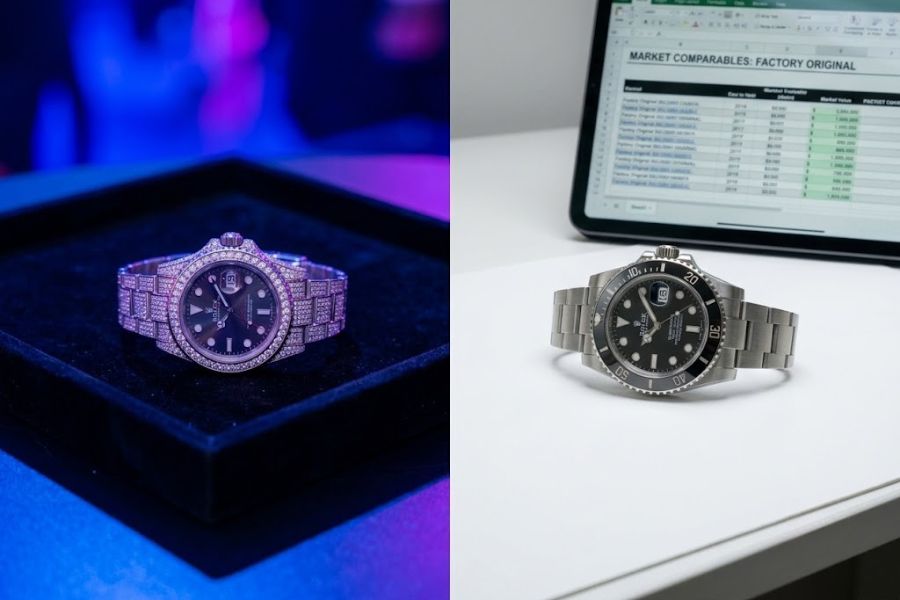
Instead of modifying a luxury watch, collectors often pursue factory alternatives or diversified collections that maintain both visual appeal and resale stability.
- Factory diamond-set Rolex and AP models
- Higher reference variations with built-in factory customization
- Diversified collections across Rolex, Patek Philippe, Audemars Piguet, Cartier, and Richard Mille
Final Perspective: Luxury That Moves vs Luxury That Stays
In Miami, luxury is often defined by visibility and immediate impact. In the global watch market, value is defined by structure, originality, and liquidity.
Aftermarket diamonds may enhance visual presence in nightlife environments, but they permanently transform how a watch is classified, valued, and traded. Understanding this distinction is what separates emotional purchases from informed collecting decisions.
Next Steps With Florida Watch Exchange
If a modified watch is already in your collection, the practical question is what it will realistically bring. We price aftermarket-set pieces honestly rather than refusing them, so send the details and get an offer. Sellers around Miami and Aventura can also bring the watch in and have it looked at in person.